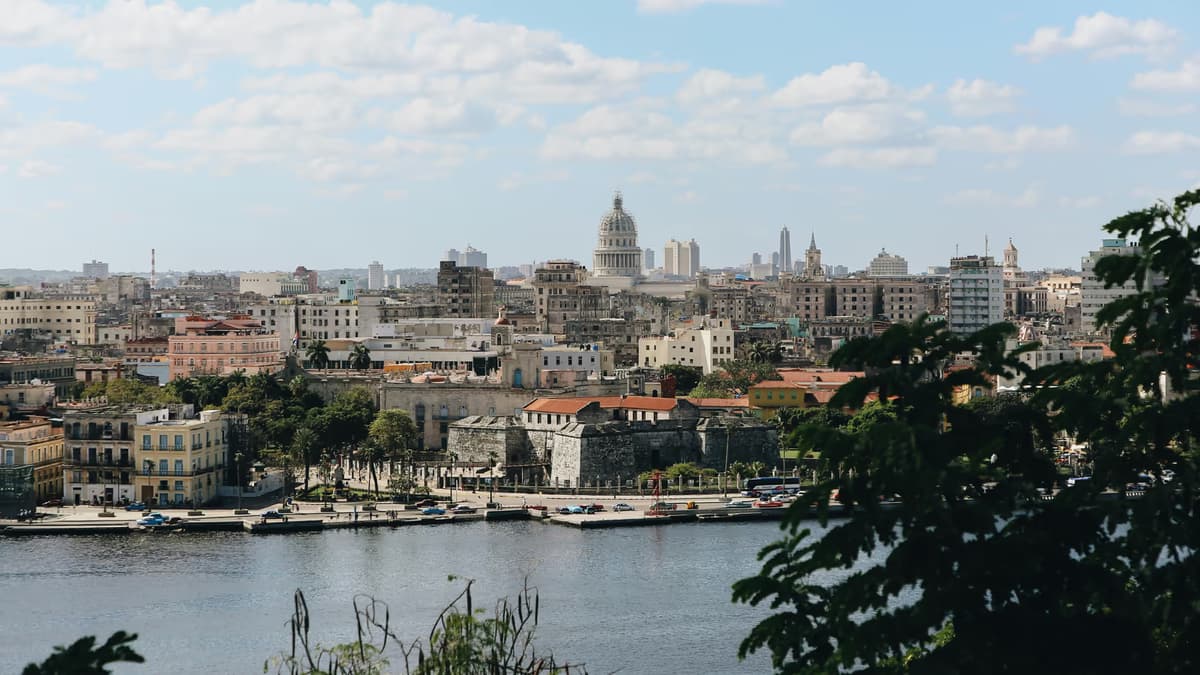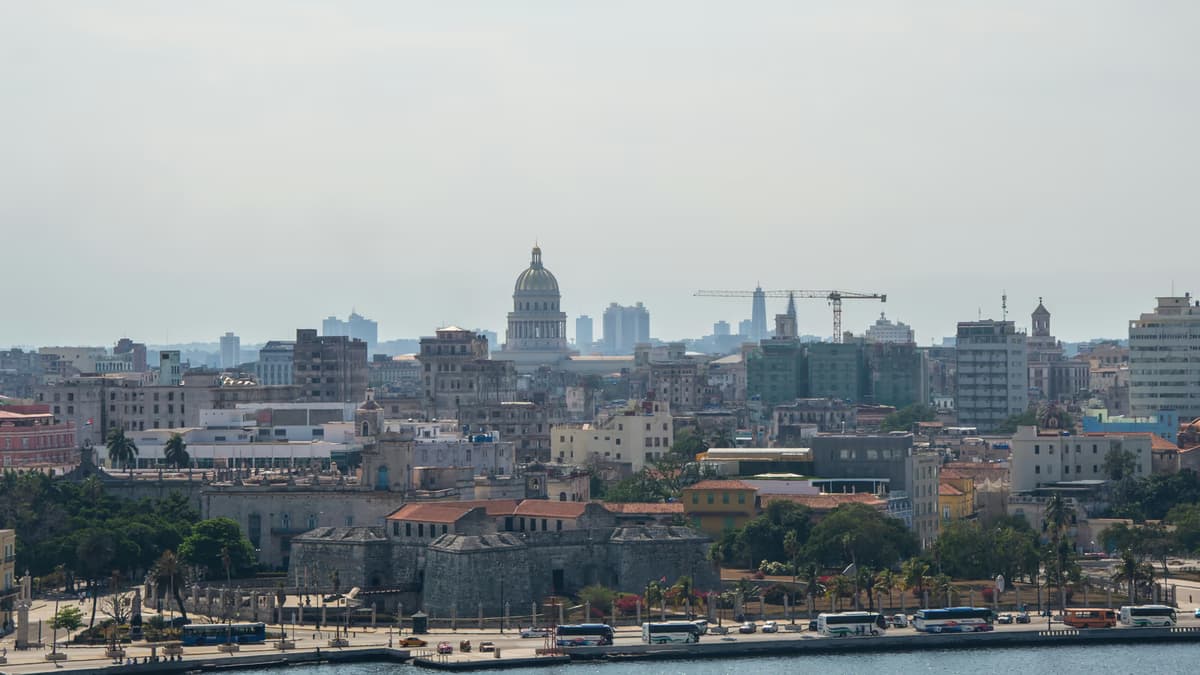
Five years running El Caimán means a specific kind of inbox. Every Monday, three new messages from someone in Miami, Madrid, or New Jersey asking the same thing in slightly different words: what does a house actually cost in Havana right now? The honest answer is that "Havana" is not a price. It's fifteen municipios with fifteen markets, and the difference between Vedado and Boyeros is bigger than the difference between Cleveland and Beverly Hills. (We know how that sounds. We've also seen the listings.)
TL;DR
- Total Havana range in 2026: $10,000 USD (outer municipios) to $300,000+ (Vedado, Miramar, primary-line Playa).
- Citywide median: $48,000 USD. Inner Habana median: $65,000. Outer municipios median: $22,000.
- Four neighborhoods carry most of the diaspora and foreign demand: Vedado, Miramar/Playa, Habana Vieja, Plaza de la Revolución.
- US buyers: the 2022 Cuban reform doesn't change the wire problem. Route money through Mexico, Panama, cash, or Western Union.
- Live inventory and neighborhood filters on the interactive map.
"Havana" is fifteen markets, not one. Read this before you read a single listing.
The city the world calls Havana is La Habana, the Cuban province of the same name, split administratively into fifteen municipios. The ones diaspora and foreign buyers shop in cluster into roughly four zones: the inner cultural ring (Plaza de la Revolución, Centro Habana, Habana Vieja), the western residential belt (Playa, which includes Miramar and Siboney), the eastern bedroom municipios (Habana del Este, Regla, Guanabacoa), and the outer ring (Boyeros, La Lisa, Arroyo Naranjo, San Miguel del Padrón, Diez de Octubre, Cerro, Marianao, Cotorro).
Pricing varies by a factor of fifteen to one across those zones. A finished apartment in Vedado lists at $90,000 USD; a similar-sized finished house in Arroyo Naranjo lists at $14,000. Same city, same country, same week. The variance is not noise — it's the geography of where the salaries, the embassies, the universities, and the international airport actually are.
(If you have ever searched Zillow for "Miami" and gotten Edgewater condos and Hialeah ranchitos in the same scroll, you already understand the problem. This is that, with seventy more years of historical layering.)

The neighborhoods that matter — and what they actually cost.
Six clusters cover roughly 90 percent of the listings worth your attention. The rest are either too rural to call "Havana" in a practical sense or too compromised structurally to recommend without a long footnote. We'll be specific.
Vedado
The cultural and architectural anchor of 20th-century Havana. Apartments from the 1920s through the 1950s in mid-rise buildings, many with the cast-iron balconies and terrazzo floors that make Vedado photograph the way it does. Two- and three-bedroom apartments list $35,000 to $90,000 USD; ground-floor units with patios and the rare single-family casona run $120,000 to $250,000+. Median turnaround: 52 days when title is clean. The catch: roughly half the building stock has shared structural elements (roofs, common piping, façades) where neighbors must coordinate for major repairs — and coordinating with seven Cuban neighbors on a roof repair is a hobby in itself.
Miramar and Playa (1ra to 5ta Avenida)
Ex-diplomatic Havana. Pre-1959 villas of the upper middle class, many later assigned to government use and then privatized in waves starting in the 1990s. One- and two-story houses on 400 to 1,200 m² lots with garages, gardens, and the deepest stock of restored 1940s and 1950s architecture in the country. Range: $80,000 to $400,000+ USD. Median in the heart of Miramar: $170,000. This is also where the foreign-investor demand concentrates — long-term rentals to embassy staff, NGO offices, and Spanish-speaking remote workers.
Habana Vieja
Split in two by an invisible line: properties inside the Oficina del Historiador restoration perimeter, and properties outside. Inside, you're buying into a UNESCO-adjacent ecosystem with permits, oversight, and resale conditions; outside, you're buying a pre-1900 building whose state of repair is whatever you find when you walk in. Range across both: $25,000 to $150,000 USD. The restored colonial casona on a small plaza, photographed beautifully and priced at $120,000, is real. So is the partially collapsed structure on the same block listed at $18,000 because the seller doesn't want to deal with the city anymore.
Centro Habana
Dense, working-class, the highest turnover rate in the city. Two- and three-room apartments in mid-rise buildings, many subdivided over decades. Range: $15,000 to $45,000 USD. The price is right; the maintenance debt is real. (We saw a 2024 listing where the seller included, in the description, the line "the building has a leak but it's the neighbor's, not ours." The neighbor disagreed. The buyer withdrew. The leak is still there.)
Plaza de la Revolución and Nuevo Vedado
The residential bridge between Vedado and the western municipios. Mid-century houses and apartment buildings, some single-family, some multi-family converted in the 1970s. Range: $30,000 to $90,000 USD. Median: $52,000. The sweet spot for a diaspora retiree who wants the Vedado lifestyle minus the Vedado price tag, with the trade-off of a 15-minute walk to the same coffee shops.
Outer municipios — Boyeros, La Lisa, Arroyo Naranjo, San Miguel del Padrón, Diez de Octubre, Cerro
Single-family houses, often with small patios, frequently built or expanded incrementally between the 1960s and the 1990s. Range: $10,000 to $35,000 USD. Median: $20,000. The deep value zone for buyers whose ceiling is $30,000 and whose patience is long. Hospitals, notaries, and the airport are 20 to 45 minutes away depending on traffic and which gas the almendrón has that day.
What it actually costs, by neighborhood.
The honest table. Prices are 2026 medians from active inventory plus recently closed sales we've moderated. Closing times assume clean title — add 4 to 12 weeks if any of the red flags below apply.
| Neighborhood / cluster | Median | Typical range | Closing time | Stock depth |
|---|---|---|---|---|
| Vedado | $62,000 USD | $35,000 – $250,000 | 52 days | Deep |
| Miramar / Playa | $170,000 USD | $80,000 – $400,000+ | 70 days | Moderate |
| Habana Vieja | $55,000 USD | $25,000 – $150,000 | 65 days | Moderate |
| Centro Habana | $28,000 USD | $15,000 – $45,000 | 38 days | Very deep |
| Plaza / Nuevo Vedado | $52,000 USD | $30,000 – $90,000 | 48 days | Deep |
| Outer municipios | $20,000 USD | $10,000 – $35,000 | 42 days | Very deep |
The map at /mapa?provincia=La+Habana filters live inventory by municipio, price ceiling, and number of rooms. Listings show their last price change, which is the single most useful data point for negotiation. (A house listed three months ago at $58,000 and dropped to $48,000 is telling you something specific. Read it.)
Pre-1959 vs. post-1959 — why this matters more in Havana than anywhere else.
In Holguín or Camagüey, a house is a house. In Havana, the year a property was built is half of what you're buying. The cutoff isn't just architectural — it's legal, structural, and economic.
Pre-1959 stock (roughly 60 percent of inner-Havana inventory) is the architecturally distinctive part: terrazzo, art deco, Spanish colonial revival, eclectic. The construction quality of the 1920s through 1950s in Cuba was, by genuine measure, world-class for its moment — reinforced concrete and proper steel, designed for hurricanes and humidity. Sixty-plus years of deferred maintenance is the problem. A 1948 building with original wiring, original plumbing, and original roof slabs is asking for $20,000 to $60,000 USD in honest restoration. Many sellers price the restoration in; many don't.
Post-1959 stock divides further. The 1960s and 70s produced serviceable but cosmetically plain construction, often Soviet-pattern multifamily blocks in Alamar, Plaza, and the outer municipios. The 1980s onward saw less centralized construction and more owner-extended houses — additions, second floors, enclosed patios done over decades with whatever materials were available. The legal title on those extensions is the question to ask first: was the extension permitted and registered, or is it living in a legal gray zone? (Both happen. Often. We've watched buyers discover the answer post-closing. It rarely ends well.)

Four buyer profiles you'll see in Havana. Which one are you?
The buyers sort cleanly. After five years of moderating every incoming inquiry, we can predict the next two questions from the first one. Knowing your profile is the difference between a three-month search and a fifteen-month one.
The US diaspora buyer
About half of all foreign-origin demand on the Havana side of our platform. Cuban-born or first-generation Cuban-American, lives in Miami, New Jersey, Tampa, or Houston, often with parents or grandparents still in the city. Typical budget $40,000 to $120,000. Target: Vedado, Plaza, Nuevo Vedado, Miramar; sometimes a specific block in Centro Habana for inheritance buy-out reasons. The money problem is real but solvable; the OFAC compliance problem is real and requires a specialized attorney. Title is usually held by the Cuban-resident family member.
The retornado / Cuban repatriate
50 to 70 years old. Left Cuba in the 1980s or 1990s, naturalized abroad, came back through the repatriación process (or kept a Cuban ID throughout), now holds permanent Cuban residency on paper. Can buy outright in their own name. Budget $30,000 to $100,000. Target: the neighborhood they grew up in, plus or minus three blocks. The most emotionally complicated buyer we work with — the house they remember has been remodeled twice, and the patio is smaller than it was in 1987.
The post-2022 foreign investor
Spanish, Italian, Canadian, Mexican, sometimes Russian. Triggered by the 2022 Decreto-Ley 80 reform that opened broader investment participation. Budget $80,000 to $400,000. Target: Miramar villas for long-term rental to embassy and NGO staff (gross yields in the 5 to 9 percent range before management), or Habana Vieja restoration projects for tourism rental once the licencia de hospedaje is in place. Legal structure: either a Cuban-resident nominee or a Cuban commercial entity via Mariel zone. Setup cost for the latter: $5,000 to $15,000 USD.
The local Cuban with USD savings
The buyer profile most outsiders forget about. Cubans with steady remittances, MIPYME income, or USD-paying jobs, looking for an upgrade from a smaller apartment or a step from rental into ownership. Budget $15,000 to $50,000. Target: Plaza, Diez de Octubre, Cerro, and the inner blocks of Centro Habana. Pays cash, moves fast, knows the city in a way no foreign buyer ever will, and sets the floor for what Havana inventory actually sells at — not what it's listed at.
Legal steps for diaspora and US buyers — the Havana-specific version.
The full country-level legal layer is covered in our pillar guide on homes for sale in Cuba. What changes when the property is in Havana, specifically:
Notary geography matters. Each municipio has its own notarías públicas with different wait times. The Plaza de la Revolución and Centro Habana notarías run 4 to 6 weeks out as of mid-2026; Habana Vieja runs 3 to 5 weeks; outer municipios like Boyeros and La Lisa can be booked in 2 to 3 weeks. The sale is executed at the notary in the municipio where the property is registered, not where the seller or buyer lives. Plan around it.
The Property Registry for Havana is centralized at the Registradores de la Propiedad oficinas, with one per provincia (here, the Provincia La Habana office on Línea, Vedado). The extract of the Registro — the document that confirms registered title in the seller's name — is the single most important piece of paper to demand before any deposit. Ask for the extracto del Registro de la Propiedad. If the seller doesn't have one or has to "get it next week," your clock starts now, not at closing.
The airport reality. José Martí International (HAV) Terminal 3 handles all international arrivals. Plan inspection trips around the limited US-Havana direct routes (Miami, Houston, currently; schedules shift quarterly) and budget for the now-routine 45-minute to 2-hour customs and immigration window. If you're bringing certified cash within the $10,000 US declaration threshold, declare it cleanly on both the US exit and Cuban entry — the small fraction of buyers who skip the declaration pay for it in ways the savings never justify.
OFAC compliance. The US embargo's real-estate exception sits inside the general license framework around family support and inheritance. For non-family transactions or transactions above specific thresholds, a specific OFAC license may be required. The US Treasury's OFAC Cuba sanctions FAQ is the authoritative starting point. We are not your lawyer; before structuring a Havana purchase as a US person, hire one who specializes in OFAC.
Five Havana-specific red flags we see every week.
The country-pillar guide covers the universal red flags (unregistered title, state property listed as private, photo deception, beachfront concession confusion, absent diaspora seller). These five are Havana-specific — patterns we've moderated repeatedly in this city that don't apply equally elsewhere.
-
"Papeles en trámite" — meaning the seller is in the middle of registering title or clearing an inheritance, but hasn't finished. In Havana, where the Registry workload sits at 4 to 14 weeks depending on the case, en trámite can mean anywhere from "two weeks out" to "we filed this three years ago and forgot." Ask for the case number, the date filed, and a recent status check from the Registry. No case number, no deposit.
-
The Habana Vieja restoration jurisdiction question. Properties inside the Oficina del Historiador's perimeter are subject to permits and resale limits that change the math entirely. Many listings in Habana Vieja don't disclose this either way. Verify on the Oficina's map of the protected zone before you commit. If the property is inside the perimeter and the seller didn't mention it, that's not an oversight — that's a signal.
-
Soviet-era condo-style buildings with deferred common-area debt. Bloques in Alamar, La Lisa, and parts of Plaza were built under centralized maintenance models that collapsed in the 1990s. Today, common-area repairs (roof, elevator, façade, water tank) are coordinated by tenant associations with very mixed records. Ask about the last roof repair, the last water-tank cleaning, and whether there's a current repair fund. If the answer is "vamos a ver", you're inheriting a problem.
-
Water and power schedule by zone. Havana's water supply is zoned — different neighborhoods receive water on different days and different hours. Some buildings have rooftop cisterns; some don't. Some neighborhoods (parts of Centro Habana, the higher blocks of La Lisa) receive water 2 to 3 times a week. Power blackouts are scheduled by circuit, and circuits differ by municipio. Ask the seller for their current weekly water schedule and the typical apagón pattern. If they can't answer, they don't live in the house.
-
The "vista al mar" overstatement. Listings claim ocean views liberally. The actual ocean-view inventory in Havana is narrow: the first row of buildings on the Malecón (between Prado and Maceo, plus the Vedado stretch), the first two rows in Miramar (1ra and a section of 3ra Avenida), and specific blocks in Habana del Este. Everywhere else, vista al mar means with binoculars on a clear day from the roof if the neighbor's addition doesn't block it. Drive by, walk the block, confirm the line of sight.

The rule of thumb — when a Havana listing is worth a flight.
Four conditions. All four hold, or you keep looking. Havana inventory is deeper than Vedado-locals admit and shallower than diaspora-emails assume — supply moves, but the listing that's right for you appears every six to ten weeks on average, not every week.
- Registered title with a current extract from the Registro de la Propiedad. Date stamp within the last 6 months.
- Modalidad de propiedad confirmed as propiedad privada plena in writing. Not state-assigned. Not partial. Not contested inheritance.
- Price within ±15 percent of the neighborhood median in the table above, or with a clearly articulated reason for the outlier (recent full restoration, exceptional view, exceptional lot, deep negotiation room visible in the listing history).
- Realistic closing timeline that accounts for the notary appointment lead time in the specific municipio (you can verify the current wait by asking any active notary; we update our internal map quarterly).
The Havana market rewards patience the same way it rewards relationships. (Which is to say: deeply, slowly, and unevenly.) Move when the conditions hold. Hold when they don't.
Direct answers.
Can a US citizen buy a house in Havana?
Not directly in their own name unless they hold permanent Cuban residency. The structure used by the diaspora is to have a Cuban-resident family member hold title, with a private side agreement and ideally a notarized power of attorney for future actions. The US embargo doesn't prohibit the underlying purchase under most OFAC general licenses tied to family support, but US banks won't process the wire. The funds route through Mexico, Panama, certified cash on family visits within the $10,000 US declaration threshold, or Western Union (capped at $2,000 USD per recipient per month). Consult an OFAC-specialized attorney before structuring anything.
What is the cheapest neighborhood in Havana to buy a house?
The outer municipios — La Lisa, Boyeros, Arroyo Naranjo, San Miguel del Padrón — produce the deepest inventory under $30,000 USD. Cerro and Centro Habana also have homes in the $15,000 to $35,000 range, closer to the historic center but with more structural compromises. The trade-off is honest: cheaper homes are 20 to 45 minutes from the inner-ring notaries, hospitals, and the airport, and the public transport is unreliable.
How do I pay for a house in Havana if US banks block the wire?
Three channels, often combined. First, intermediary bank in Mexico, Panama, or Europe — the intermediary takes 2 to 4 percent. Second, certified physical cash on family visits, legal up to the $10,000 US declaration threshold per traveler. Third, Western Union, currently capped at $2,000 USD per recipient per month. Larger purchases split across channels and across months. Budget 6 to 12 weeks for the money side alone, separate from the closing timeline.
Is it safe to buy a colonial house in Habana Vieja?
Safe if you do the diligence; ruinous if you skip it. Verify whether the property sits inside the Oficina del Historiador's restoration perimeter — that determines the permit and resale regime. Demand a recent structural inspection. Confirm registered title in private ownership. Roughly a quarter of the Habana Vieja listings we moderate fail at least one of those checks; the ones that pass all three are among the best long-term holds in the city.
How long does the buying process take in Havana?
With registered title, a resident seller, and clean modalidad: 8 to 14 weeks from agreement to keys. Add 4 to 8 weeks if the Registry needs to clean up title — common in Centro Habana and Habana Vieja. Add 4 to 12 weeks if the seller lives abroad. The notary appointment in the property's municipio is the binding constraint; current Havana wait times run 2 to 6 weeks depending on the municipio.
If you're ready.
The Havana market moves at the pace of its notarías, which is to say, not fast. That works in your favor. There's time to ask about title before you ask about price. There's time to visit the block at 6 p.m. on a Tuesday to see what the water and the traffic actually look like. There's time to read the seller's listing history before you start negotiating.
When you're ready, browse the live inventory of houses for sale in Havana on our interactive map. If you're on the other side — selling a Havana property and not sure where to start — listing is free, there's no closing commission, and the first listing typically goes live in about the time it takes to drink a cafecito and answer six diligence questions.
For the Spanish-speaking side, our pillar guide on casas en venta en La Habana, Cuba covers the same ground with local detail and neighborhood vocabulary. For the country-wide picture in English, our pillar on homes for sale in Cuba covers the provincial map and the cross-province legal layer. And the Spanish-language landing for casas en La Habana is where the diaspora search traffic from Google Translate eventually lands — so the inventory is the same, the language is just different.
Havana is a city that rewards the buyer who reads. Which, given you're still here at the bottom of this post, looks like a good sign.